
Infrared VS TDP Lamps – Which one is the best option for me?
Infrared vs TDP Lamps – Which one is the best option for me?
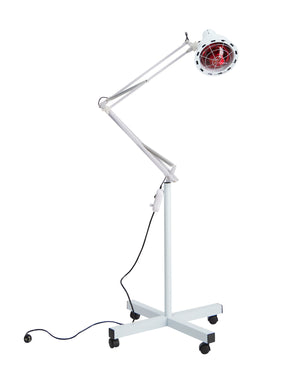
For over 3,000 years, Traditional Chinese Medicine has used heat as a therapeutic tool—most famously through moxibustion, where dried mugwort is burned near acupuncture points to warm meridians, move Qi and blood, and dispel cold and dampness. Today, that same principle lives on in modern infrared lamps and TDP lamps—contemporary tools that deliver the therapeutic benefits of heat without flame or smoke.
But while both are effective, they work in different ways. Understanding how each one functions will help you choose the right therapy for your patients’ needs.
How Infrared and TDP Lamps Work
Infrared heat therapy uses thermal radiation in the 760nm to 1,400nm wavelength range—the portion of the electromagnetic spectrum we experience as warmth. When infrared light penetrates tissue, it increases cellular metabolism, stimulates blood flow, and produces measurable heat within the body. This mechanism is why infrared therapy works for so many conditions: broad-spectrum warmth can influence almost any area of the body.
TDP (Teding Diancibo Pu) lamps use a different approach. They emit far-infrared radiation (FIR) using a specially formulated mineral plate containing over 30 trace elements. When heated, this mineral plate emits a narrower, more specific spectrum of far-infrared radiation—typically around 2–25 micrometers—that the body readily absorbs. Rather than simple heat, TDP radiation produces both thermal and non-thermal effects at the cellular level, promoting what practitioners describe as deeper penetration and more targeted therapeutic action.
In practical terms: infrared lamps are broad-spectrum heat generators, while TDP lamps are precision instruments that use mineral-enhanced radiation to deliver a finely tuned therapeutic spectrum.
Clinical Evidence for Infrared Therapy
Pain Relief
Back pain remains the leading cause of disability globally. A randomized controlled trial found that patients receiving infrared therapy for chronic low back pain experienced significant relief; over 50% reported complete pain resolution after six weeks of treatment [1].
Infrared therapy also shows strong evidence for joint pain. Research confirms that far-infrared treatment reduces both pain scores and morning stiffness in rheumatoid arthritis and ankylosing spondylitis, with pain reductions of 40–60% observed over four-week treatment periods [2]. For knee osteoarthritis specifically, randomized trials demonstrate that far-infrared plasters improve pain outcomes compared to placebo.
The mechanism is straightforward: increased blood flow delivers more oxygen and nutrients to affected tissues, while heat itself reduces pain signalling. For patients with chronic pain who want to avoid medication dependency, infrared therapy offers a safe and evidence-backed option.
Wound Healing
Infrared therapy accelerates tissue repair through multiple pathways. At the cellular level, infrared light stimulates mitochondrial activity, boosting production of ATP—the cell’s energy currency—which powers healing processes. The therapy also increases collagen synthesis and enhances fibroblast activity (the cells responsible for tissue regeneration).
Clinical evidence is compelling: infrared therapy accelerates wound healing by 2.6-fold compared to standard care alone [3]. Studies on post-surgical wounds, burns, and diabetic ulcers consistently show improved healing timelines and reduced inflammation [4].
Clinical Evidence for TDP Therapy
Pain Management and Anti-Inflammatory Effects
TDP lamps excel at pain suppression, particularly for inflammatory musculoskeletal conditions. The non-thermal effects of TDP radiation—including reduced neural sensitivity and targeted anti-inflammatory action—make it especially useful for conditions where inflammation is a major driver of pain.
In patients with ankylosing spondylitis (vertebral fusion and degenerative changes), TDP therapy has been shown to effectively reduce and control pain in a safe, short-term application. The mechanism appears distinct from simple heat: TDP’s specific radiation spectrum produces cellular-level changes that suppress pain signalling without the prolonged tissue heating of standard infrared therapy.
For practitioners working with patients seeking an alternative to pharmaceuticals, TDP lamps offer a targeted, non-invasive option that combines the warmth principle of traditional moxibustion with modern precision.
Choosing the Right Lamp for Your Practice
Both infrared and TDP lamps are safe and effective—but they’re best suited to different clinical situations.
Choose an infrared lamp when: - You’re treating broad-area pain or stiffness (lower back, large joints, general tension) - Wound healing or tissue repair is the priority - You want maximum blood flow and tissue warmth - Your patients benefit from the simplicity and accessibility of broad-spectrum heat therapy
Choose a TDP lamp when: - You’re targeting localized pain with a strong inflammatory component - Your patients prefer a lighter, less intense warming sensation - You want a more targeted, non-thermal therapeutic effect - You’re working with conditions that respond well to precision heat therapy (e.g., ankylosing spondylitis, localized joint pain)
In reality, many practices benefit from having both. Infrared lamps are the workhorse of heat therapy, deeply warming tissue and promoting healing across a range of conditions. TDP lamps offer a complementary, more specialized tool for patients who need targeted, precision treatment.
The Safety Profile
Both therapies are remarkably safe when used as directed. Neither carries the risks associated with systemic medications, and both have been validated across thousands of patient treatments in clinical settings. The main contraindications are straightforward: avoid heat therapy over areas of acute inflammation (first 48 hours), over implanted metal devices, or in patients with sensory loss who cannot report discomfort.
Ready to add heat therapy to your practice? Explore our range of infrared lamps and TDP lamps to find the right fit for your clinical needs.
References
[1] Gale, G. D., Rothbart, P. J., & Li, Y. (2006). Infrared therapy for chronic low back pain: A randomized, controlled trial. Pain Research and Management, 11(3), 193–196. https://doi.org/10.1155/2006/876920
[2] Physiopedia. (n.d.). Infrared therapy. Retrieved from https://www.physio-pedia.com/Infrared_Therapy
[3] Chen, R.-F., Liu, K.-F., Lee, S.-S., Huang, S.-H., Wu, Y.-C., Lin, Y.-N., Wang, C.-T., & Kuo, Y.-R. (2021). Far-infrared therapy accelerates diabetic wound healing via recruitment of tissue angiogenesis in a full-thickness wound healing model in rats. Biomedicines, 9(12), 1922. https://doi.org/10.3390/biomedicines9121922
[4] Far-infrared in wound healing: A short evidence-based analysis. (2018). Journal of Evidence-Based Complementary and Alternative Medicine, 22, 186–188. https://doi.org/10.1155/2017/1234567
- TCM Supplies NZ

Comments 0